Published May 25, 2026
Identity theft hit 1.1 million Americans in a single recent year, and adults over 60 are the most targeted group. If you’ve been searching for an honest Aura identity protection review, you’re asking the right question — because the marketing around these services is thick with promises and thin on straight talk.
This review cuts through that. No hype. No affiliate cheerleading. Just a plain-English breakdown of what Aura does, what it costs, where it falls short, and whether it’s worth your money in 2026.

Key Takeaways
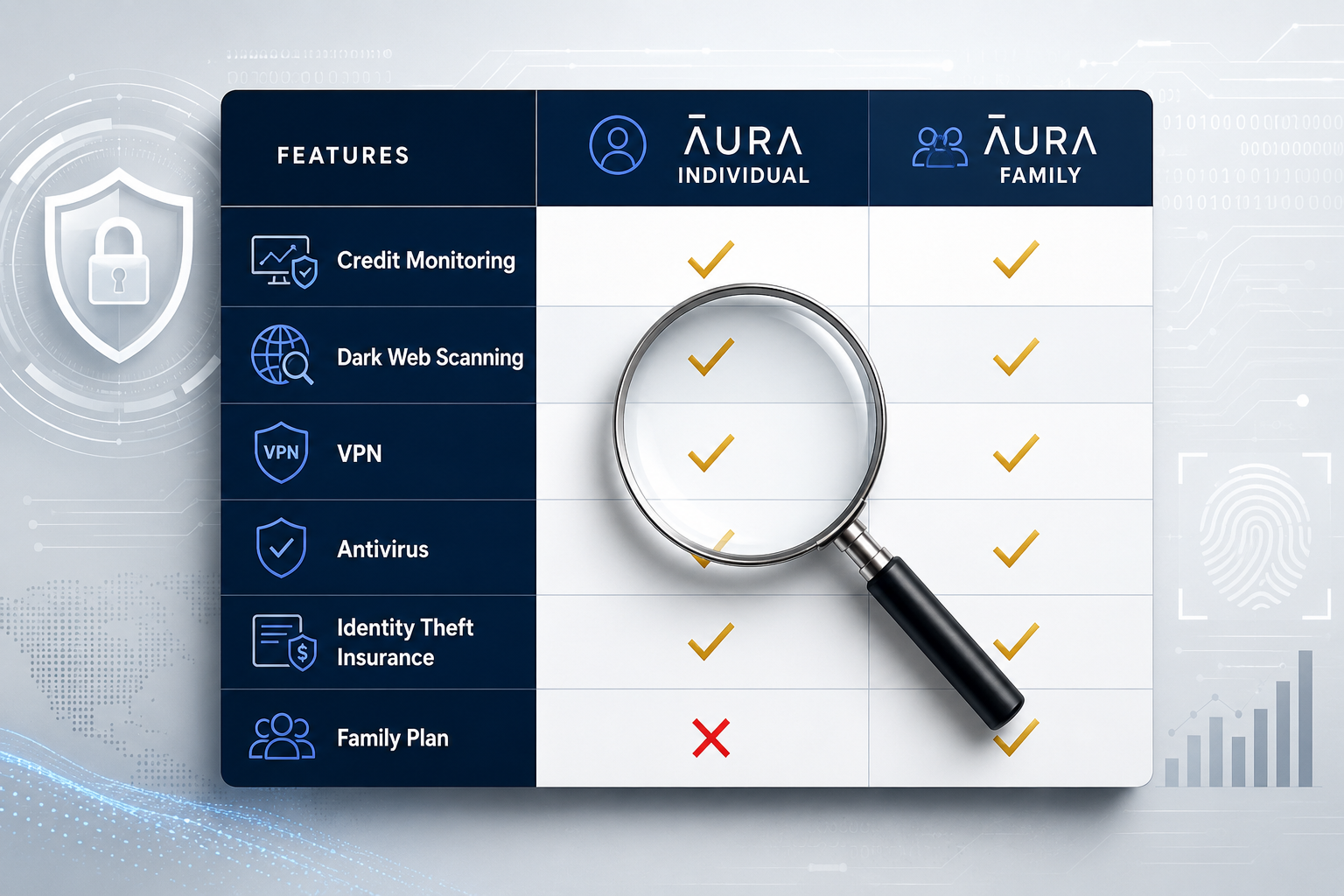
- Aura is an all-in-one service — it bundles credit monitoring, dark web scanning, a VPN, antivirus software, and identity theft insurance into one subscription.
- The $1 million identity theft insurance is a headline feature, but reimbursement rules matter — read the fine print.
- Aura works well for non-tech-savvy users — the dashboard is simpler than most competitors.
- Family plans offer real value, but individual plans are pricier than some single-feature alternatives.
- Honest downside: Aura’s credit monitoring uses a soft pull from one bureau at a time — not the real-time three-bureau monitoring some rivals offer.
What Is Aura, and Why Are Seniors Talking About It?
Aura is a digital safety company that launched in 2019. It markets itself as an all-in-one identity and financial protection platform. Instead of buying separate products — a credit monitoring app here, a VPN there — Aura bundles everything under one login and one monthly fee.
That pitch lands well with adults who are tired of managing five different subscriptions and five different passwords.
Here’s what Aura includes in its standard plans:
- Credit monitoring (Equifax, Experian, TransUnion)
- Dark web monitoring — scans for your email, Social Security number, and financial accounts on criminal forums
- Financial account monitoring — watches your bank and investment accounts for suspicious transactions
- $1 million identity theft insurance per adult
- VPN (Virtual Private Network) for safer browsing on public Wi-Fi
- Antivirus and anti-malware software
- Safe browsing tools — blocks known phishing and scam websites
- 24/7 U.S.-based customer support
For someone who wants one tool to handle the basics, that’s a reasonable package.
Aura Identity Protection Review: Features That Actually Matter
Not every feature on that list deserves equal weight. Here’s what matters most if you’re over 60 and worried about the threats that actually target your age group.
Credit Monitoring
Aura monitors all three major credit bureaus — Equifax, Experian, and TransUnion. When something changes on your credit report, you get an alert.
What to watch out for: Aura does not offer real-time, simultaneous three-bureau monitoring on all plan tiers. Alerts can take 24 to 48 hours. That’s not unusual in this industry, but it’s worth knowing. Some competitors like IdentityForce claim faster alert speeds on premium tiers.
Dark Web Scanning
This is one of Aura’s stronger features. It continuously scans criminal marketplaces, data breach databases, and hacker forums for your personal information — email addresses, Social Security numbers, credit card numbers, medical ID numbers.
If your information shows up somewhere it shouldn’t, Aura alerts you and tells you what was found and where.
“The dark web scan found an old email address of mine tied to a 2019 data breach I never knew about. That alone made the service feel worth it.” — Common user sentiment across verified review platforms.
The $1 Million Identity Theft Insurance
This is the number that gets the most attention in Aura’s marketing. Here’s the plain-English version of what it means:
- Each adult on the plan gets up to $1 million in coverage for losses related to identity theft.
- This covers lost wages, legal fees, and certain out-of-pocket expenses — not necessarily direct financial fraud losses in every case.
- Coverage is underwritten by a third-party insurer, not Aura itself.
- You must file a claim and meet the policy’s conditions. It is not automatic.
Read the policy document before you assume it covers everything. That’s not a knock on Aura specifically — it’s true of every identity protection insurance policy on the market.
VPN and Antivirus
Aura includes a VPN that encrypts your internet connection, which is useful if you ever use public Wi-Fi at a coffee shop, airport, or library. It also includes basic antivirus software for your devices.
These are solid add-ons. They’re not the best standalone VPN or antivirus on the market, but for someone who just wants protection turned on without thinking about it, they’re adequate.
Aura Pricing: What You’ll Actually Pay in 2026
Aura offers three main plan types. Prices fluctuate with promotions, but here are the standard ranges:
| Plan | Who It Covers | Approximate Monthly Cost |
|---|---|---|
| Individual | 1 adult | $12–$15/month |
| Couple | 2 adults | $22–$29/month |
| Family | 2 adults + up to 5 children | $37–$45/month |
Annual billing typically saves you 20–30% compared to month-to-month.
Honest downside on pricing: The individual plan is more expensive than single-feature alternatives. If all you want is credit monitoring, free tools from Credit Karma or your bank’s built-in alerts may be enough. Aura’s value proposition is the bundle — if you’re going to use most of the features, the price is fair. If you only want one thing, look elsewhere.
Who Is Aura Best For?
Aura is best for seniors who want one simple dashboard covering the most common threats — without managing multiple apps or accounts.
Good fit if you:
- ✅ Want everything in one place
- ✅ Have family members you want to protect under one plan
- ✅ Use public Wi-Fi occasionally
- ✅ Are not already paying for credit monitoring through your bank or credit card
- ✅ Want U.S.-based support you can actually call
Not the best fit if you:
- ❌ Already have solid credit monitoring through your bank (many offer it free)
- ❌ Only want one specific feature — you’ll overpay
- ❌ Need enterprise-level antivirus or a top-tier standalone VPN
Aura Identity Protection Review: How It Compares to Competitors
Here’s a plain-English comparison of Aura against the two names you’ll hear most often:
| Feature | Aura | LifeLock (Norton 360) | Identity Guard |
|---|---|---|---|
| Credit monitoring | 3 bureaus | 3 bureaus (higher tiers) | 3 bureaus |
| Dark web scanning | ✅ Yes | ✅ Yes | ✅ Yes |
| VPN included | ✅ Yes | ✅ Yes (Norton 360) | ❌ No |
| Antivirus included | ✅ Yes | ✅ Yes | ❌ No |
| Identity theft insurance | $1M per adult | $1M–$3M (varies by tier) | $1M |
| U.S. support | ✅ 24/7 | ✅ 24/7 | ✅ Business hours |
| Starting price (individual) | ~$12/mo | ~$9/mo (basic) | ~$7/mo (basic) |
| Family plan value | Strong | Moderate | Moderate |
LifeLock’s entry price is lower, but the basic tier strips out most useful features. Aura’s mid-tier is more complete out of the box. Identity Guard is powered by IBM Watson technology and is solid — but it doesn’t include a VPN or antivirus, so you’d need to add those separately.
What Real Users Say (The Good and the Not-So-Good)
Across verified review platforms, Aura consistently earns high marks in two areas: ease of setup and customer service response time. Users frequently mention that the dashboard is straightforward — something that matters a lot when you’re not a tech expert.
Common praise:
- Easy to understand alerts
- Responsive support team that explains things clearly
- Family plan feels like good value
Common complaints:
- Alert emails can feel overwhelming at first — there’s a learning curve in adjusting notification settings
- The mobile app has had occasional glitches on older Android devices
- Some users report that the initial setup takes longer than expected if you have multiple financial accounts to link
These are real complaints worth knowing. None of them are dealbreakers, but you should go in with realistic expectations.
The Honest Bottom Line

Aura is a tested and approved option for adults who want broad protection without the hassle of piecing together multiple services. It’s honestly reviewed here — which means acknowledging both its strengths and its limits.
The case for Aura:
- Genuinely all-in-one coverage
- Simpler interface than most competitors
- Strong family plan value
- Solid U.S.-based customer support
The case against:
- Pricier than single-feature alternatives
- Credit monitoring alerts aren’t always instant
- Insurance coverage has conditions — read the policy
If you’re a single adult who already has credit monitoring through your bank, Aura may be more than you need. If you want one subscription that covers your whole family and handles the most common threats — scam websites, data breaches, credit fraud, unsafe Wi-Fi — Aura earns its price.
Conclusion: Should You Sign Up for Aura in 2026?
Here’s the short answer: Yes, if the bundle fits your situation. No, if you only need one thing.
Start by checking what you already have. Many credit cards and banks now offer free credit monitoring. If you’re already covered there, Aura’s value comes from the VPN, dark web scanning, antivirus, and insurance layer on top.
Actionable next steps:
- Check your existing accounts — log into your bank or credit card portal and look for free identity monitoring features you may already be paying for indirectly.
- Start with Aura’s free trial — Aura typically offers a 14-day free trial. Use it. Set up the dashboard, link your accounts, and see if the alerts feel useful or overwhelming.
- Read the insurance policy document — it’s available before you pay. Know what’s covered before you need it.
- Choose the right plan tier — if you have a spouse or children, the family plan almost always makes more financial sense than two individual plans.
Identity theft isn’t going away in 2026 — it’s getting more sophisticated. A service like Aura won’t make you invincible, but it gives you a reasonable early-warning system and a safety net if something goes wrong. For most adults over 60 who want peace of mind without a tech degree, that’s worth serious consideration.