Last updated August 23, 2026
Quick Answer: For the 2026 tax year, a payment platform or online marketplace is only required to send you a Form 1099-K, a tax form reporting the gross payments you received through that platform, if BOTH of these are true: your gross payments exceed $20,000 AND your transactions exceed 200. Both conditions must be met. If only one is met, no form is required. The $600 rule you may have heard about was repealed before it ever took effect.
Key Takeaways
- The 1099-K threshold for 2026 is more than $20,000 in gross payments AND more than 200 transactions, both conditions must be met.
- Exactly $20,000 or exactly 200 transactions does not trigger the requirement. The law says “exceed.”
- The $600 threshold was repealed by the One Big Beautiful Bill Act, signed July 4, 2025, before it ever applied to a single tax year.
- The repeal is retroactive. The $20,000 / 200-transaction rule is the governing threshold for tax years 2022 through 2026.
- No 1099-K form does not mean no tax owed. Income from selling goods or services is taxable whether or not a form arrives.
- AI assistants often cite the $600 figure because their training data predates the repeal, not because they are broken, but because the law changed after they learned. That is the same failure described in why a confident AI answer about your money is not evidence.
- Some platforms issue forms voluntarily below the federal threshold. Payment card transactions have no minimum at all.
- Some states set their own lower thresholds, check your state’s tax agency directly.
- Always verify current thresholds on IRS.gov before filing. This article is educational, not tax advice, confirm your own situation with a tax professional.
What Is the 1099-K Threshold for 2026?
The federal 1099-K threshold for 2026 requires both conditions to be true at once: gross payments through a third-party payment network must exceed $20,000, and the number of transactions must exceed 200. Miss either number and no form is legally required.
Legacy Income Academy is a free newsletter for adults over 50 — plain English about money, AI, and the things that quietly cost you money if nobody tells you. Join free. No hype, ever.
A Form 1099-K is the document a payment platform, think PayPal, Venmo for Business, Stripe, eBay, Etsy, or similar services, sends to both you and the IRS to report what you were paid through that platform during the year. It reports gross payments, meaning the total before any fees, refunds, or costs are subtracted.
The “exceed” language matters. If you received exactly $20,000 or completed exactly 200 transactions, the threshold is not met. The law requires the numbers to go beyond those figures, not simply reach them.
Did the 1099-K Threshold Change for 2026, and Why You Probably Heard $600
The $600 rule never actually applied to any tax year. Here is the full story, in plain English.
The American Rescue Plan Act of 2021 set a new 1099-K threshold of $600 with no transaction minimum. That was a dramatic drop from the existing $20,000 / 200-transaction rule. The IRS postponed it four years in a row, issuing temporary transition guidance each time while the agency worked out implementation details.
Then the One Big Beautiful Bill Act was signed into law on July 4, 2025. That law repealed the $600 rule entirely, and did so retroactively, as if it had never been enacted.
This is the most important accuracy point in this article. Because the repeal is retroactive, the $20,000 / 200-transaction rule is the governing threshold for every tax year from 2022 through 2026. The IRS transition figures that were floated for 2024 and 2025 no longer apply. Here is what that looks like across the affected years:
| Tax Year | Governing Threshold |
|---|---|
| 2022 | More than $20,000 AND more than 200 transactions |
| 2023 | More than $20,000 AND more than 200 transactions |
| 2024 | More than $20,000 AND more than 200 transactions |
| 2025 | More than $20,000 AND more than 200 transactions |
| 2026 | More than $20,000 AND more than 200 transactions |
One practical note: some platforms did issue 1099-K forms under the older temporary guidance before the law changed. If you received one for a year now governed by the higher threshold, that form still exists. The income on it is still reportable. A form issued under old guidance does not become void just because the threshold changed.
Why AI Assistants Get the 1099-K Threshold Wrong
AI tools learn from text collected up to a training cutoff date. For most of four years, from 2021 through mid-2025, the widely published answer to “what is the 1099-K threshold” was some version of “$600 is coming.” Articles, news stories, and IRS announcements all discussed it. An AI assistant trained on that period repeats it confidently, with no signal that the law later changed.
The assistant is not lying and not broken. It is reporting what was accurate when it learned. The problem is that tax law changed after the training cutoff, and the tool has no way to know that.
This points to a reusable rule worth keeping: AI is genuinely useful for understanding how a tax form works, what a 1099-K is, what gross payments means, how to read the boxes on the form. It is unreliable for deciding what a current threshold is, because thresholds change and the assistant may not know about recent changes.
Use AI to learn the concepts. Use IRS.gov to verify the current numbers.
The Mistake That Actually Costs Money: No Form Does Not Mean No Tax
Receiving no 1099-K does not mean income is not taxable. This is the misunderstanding that causes real problems at filing time.
Income from selling goods or services is reportable whether or not a 1099-K arrives. The threshold determines whether the platform files a form. It does not determine whether you owe tax on what you earned.
A plain example: suppose you sold $8,000 worth of goods through an online marketplace this year. You received no 1099-K because you did not exceed the $20,000 threshold. That $8,000 is still income you are expected to report on your tax return.
The cost-of-goods point matters here too. If you sold $25,000 of goods and paid $18,000 to acquire them, the 1099-K reports $25,000 in gross payments, but you are generally taxed on the profit, which is roughly $7,000. That is why keeping records of what you paid for the things you sold is important. The form shows the gross number. Your records show the actual profit. Without those records, you have no way to document the difference.
The Change Most Articles Miss: 1099-NEC and 1099-MISC Also Changed
The same law that repealed the $600 1099-K rule also raised the reporting threshold for two other forms, and this part gets overlooked.
Form 1099-NEC (Non-Employee Compensation) is the form a client sends you when they paid you for freelance or consulting work. It is a completely different form from the 1099-K. Previously, a client had to send a 1099-NEC if they paid you $600 or more in a year. Starting with the 2026 tax year, that threshold rises to $2,000, indexed to inflation from 2027 onward.
Form 1099-MISC covers miscellaneous income such as rent or prizes. The same $2,000 threshold applies, also starting with the 2026 tax year.
Blurring the 1099-K and the 1099-NEC together is a common error in AI-generated answers. They are separate forms with separate thresholds and separate rules. The 1099-K threshold for 2026 is more than $20,000 and more than 200 transactions. The 1099-NEC threshold for 2026 is $2,000. Neither figure applies to the other form. Whether you can deduct anything against that income is a separate question again, decided by the hobby-or-business test.
Three Ways You Can Still Get a 1099-K Below the Federal Threshold
The federal threshold is not the only trigger. Three situations can produce a form even when you are well below $20,000.
1. Payment card transactions have no minimum. When a customer pays you by credit or debit card, the card network’s merchant acquirer, the company that processes the card payment, may be required to report those transactions on a 1099-K regardless of the dollar amount. This applies to businesses that accept cards directly, not to peer-to-peer app payments.
2. Platforms can issue forms voluntarily. A payment platform is allowed to send a 1099-K even when you are below the federal threshold. Some do this as a standard practice. If you receive a form, the income on it is still reportable.
3. Your state may have a lower threshold. Several states set their own 1099-K reporting thresholds that are lower than the federal rule. Check your own state’s tax agency website for the current figure. State rules vary and change, do not rely on a general article to know your state’s current number.
How to Check Any AI Answer About a Tax Rule
Four steps that take about five minutes and save real headaches:
Ask the assistant when its information is from. Most AI tools can tell you their training cutoff date. If the answer predates a major tax law change, treat it as a starting point, not a final answer.
Ask it to name the specific law or IRS notice behind the number. A confident answer backed by a named source is easier to verify than a number floating on its own. “The American Rescue Plan Act set $600” is checkable. A bare “$600” is not.
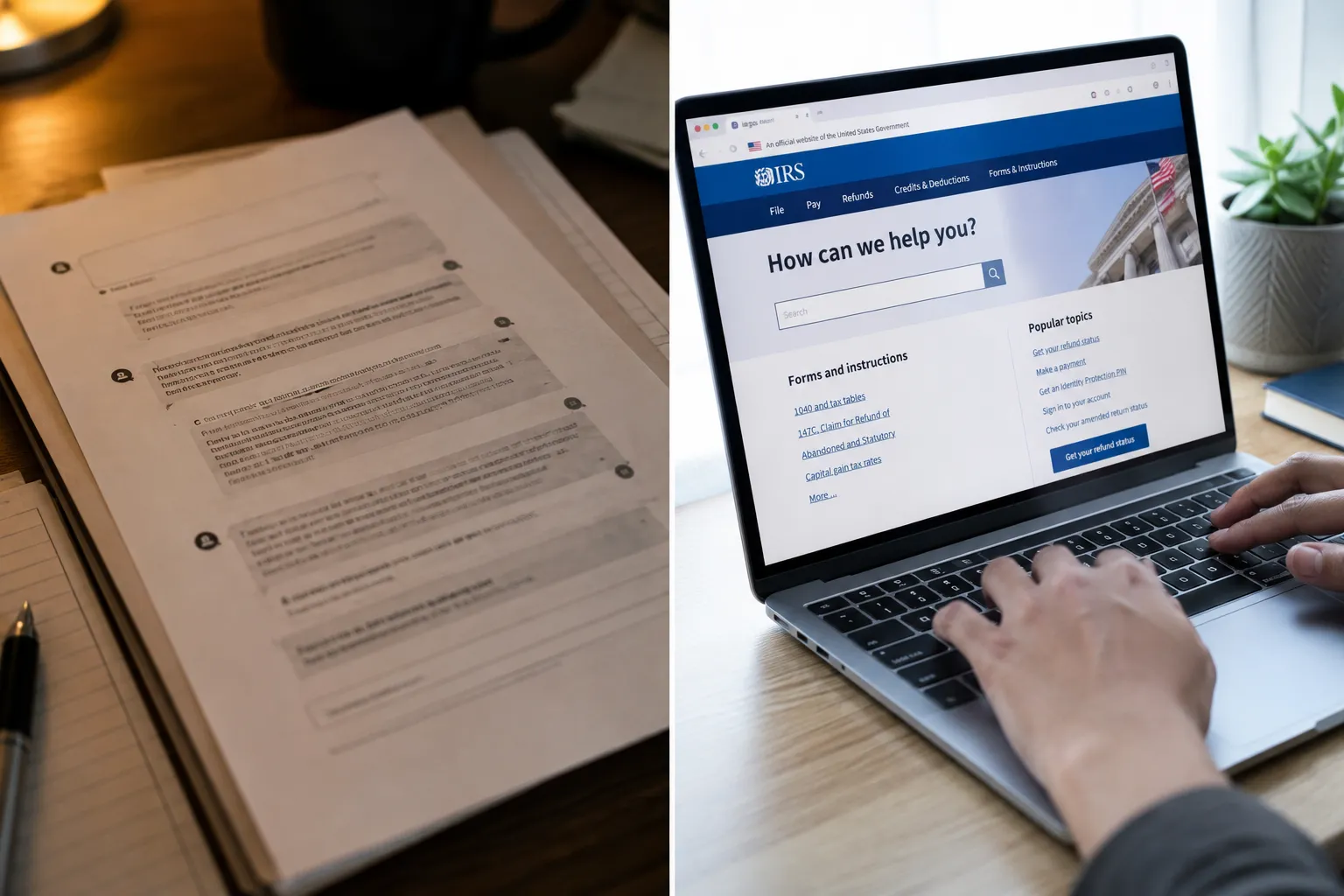
Go to IRS.gov directly. The IRS newsroom and the IRS FAQ pages are the primary source. If the number on IRS.gov matches the AI answer, good. If it does not, go with IRS.gov.
Treat any answer resting on a law from several years ago as worth re-verifying. Tax law changes. A rule that was accurate in 2023 may have been amended, postponed, or repealed by 2026. This is not a reason to distrust AI tools, it is a reason to use them as a research starting point rather than a final authority.
Your Next Step
One clear action: before you file, confirm the current 1099-K threshold directly on IRS.gov rather than relying on a remembered number from any source, including this article. Tax rules change, and the primary source is always the most reliable.
Keep records of what you sold and what it cost you to acquire those items. Profit is what gets taxed. Records are what prove it. A simple spreadsheet tracking purchase price, sale price, and platform fees is enough to start.
If your situation involves multiple platforms, significant sales volume, or income from both freelance work and reselling, a brief conversation with a tax professional is worth the time. This article explains how the rules work, it does not substitute for advice tailored to your specific return.
Frequently Asked Questions
Does the 1099-K threshold for 2026 apply to personal sales, like selling used items from my home?
The IRS distinguishes between selling personal items at a loss, like old furniture or clothes, and running a business. Selling personal items for less than you originally paid generally does not create taxable income. But if you regularly buy and resell for profit, that activity is typically treated as business income regardless of whether you get a 1099-K. When in doubt, check with a tax professional.
I received a 1099-K for 2024 showing $5,000. Does the retroactive repeal mean I can ignore it?
No. The form exists and the income on it is reportable. The retroactive repeal means the platform was not required to send the form under the current law, but a form that was issued does not become void. Report the income and keep records of your costs.
Does the $20,000 threshold apply to each platform separately or to my total across all platforms?
Each payment platform applies the threshold to its own payments to you. If you received $12,000 through PayPal and $11,000 through Stripe, neither platform is required to send a 1099-K, even though your combined total exceeds $20,000. Your total income is still taxable, however.
What counts toward the 1099-K threshold?
Gross payments processed through a third-party payment network count, meaning the full amount paid to you before fees or refunds. Personal transfers between friends and family, such as splitting a dinner bill, are not supposed to count, but how platforms categorize transactions varies. Keep your business and personal payment accounts separate to avoid confusion.
If I only exceeded 200 transactions but received less than $20,000, do I get a 1099-K?
No. Both conditions must be met. More than 200 transactions alone does not trigger the federal requirement. More than $20,000 alone does not either. Both thresholds must be exceeded at the same time.
The $2,000 threshold for 1099-NEC, does that start for work I do in 2026, or for forms filed in 2026?
The $2,000 threshold applies to payments made in the 2026 tax year. Forms reporting those payments are filed in early 2027. Work done in 2025 and reported on a 1099-NEC filed in early 2026 still falls under the old $600 threshold for that filing.
Related Reading on Legacy Income Academy
- Nobody at Social Security is counting your hours. That is not the same as being safe.
- How self-employment can cost you Social Security before full retirement age
- Making money online after 60: what actually works, what doesn’t, and how long it takes
Source Note
The threshold figures and retroactivity details in this article are drawn from two IRS primary sources:
- IRS newsroom release IR-2025-107: “IRS issues FAQs on Form 1099-K threshold under the One, Big, Beautiful Bill; dollar limit reverts to $20,000”, https://www.irs.gov/newsroom/irs-issues-faqs-on-form-1099-k-threshold-under-the-one-big-beautiful-bill-dollar-limit-reverts-to-20000
- IRS Fact Sheet 2025-08
Always verify current rules on IRS.gov before filing. Tax law can change, and the IRS primary sources are the authoritative record.
Legacy Income Academy is a free newsletter for adults over 50 — plain English about money, AI, and the things that quietly cost you money if nobody tells you. No hype, ever.
This article is educational and is not tax advice. Confirm your own filing situation with a qualified tax professional.