Last updated June 3, 2026
Every 11 seconds, an older adult is treated in an emergency room for a fall-related injury — and for seniors living alone, the gap between falling and getting help can be the difference between a full recovery and a life-changing setback. That’s why finding the best medical alert systems for seniors in 2025 matters more than most people realize until it’s too late.
I’ve dug through the research, tested the claims, and cut through the marketing noise so you don’t have to. Whether you’re a senior looking for something simple and reliable, or an adult child trying to help a parent stay safe at home, this guide gives you straight answers.
Key Takeaways
- 🏆 Bay Alarm Medical is the best overall pick, with response times of 30 seconds or less
- 🫸 Fall detection costs an extra ~$10/month but can be a genuine lifesaver for seniors at risk
- 💰 No-monthly-fee options exist (like Silent Beacon and LogicMark) — but they come with trade-offs
- 📍 GPS tracking and caregiver apps are now standard features worth looking for
- 🔍 Always check for hidden fees — activation charges and equipment costs can sneak up on you
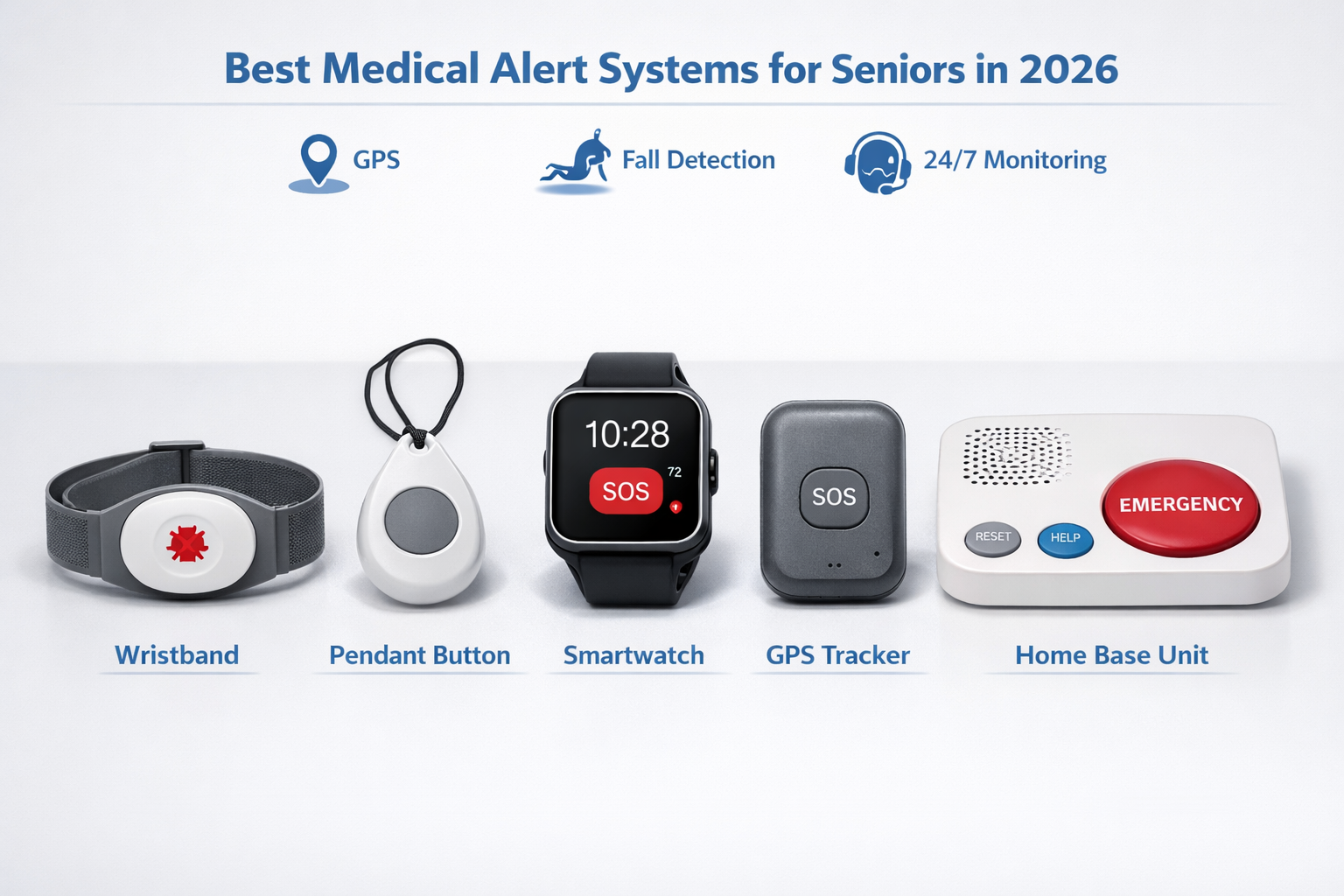
What to Look for in the Best Medical Alert Systems for Seniors in 2025
Before we get into specific brands, let’s talk about what actually matters when you’re choosing one of these systems. Not all devices are created equal, and the “best” one depends on your situation.
The Big Five Features to Consider
1. Response Time When something goes wrong, every second counts. Look for systems with monitoring centers that answer in under a minute. The gold standard is 30 seconds or less.
2. Fall Detection This is a game-changer. Automatic fall detection means the device calls for help even if you can’t press the button. It’s not perfect — no technology is — but it adds a critical safety net.
3. GPS Tracking If you or your parent leaves the house at all, GPS capability is worth the extra cost. It lets emergency responders and family members find you fast.
4. Battery Life A device that dies after 12 hours isn’t much use. Look for systems with multi-day battery life, especially for on-the-go devices.
5. Ease of Use This one gets overlooked constantly. A device with a confusing setup or tiny buttons defeats the whole purpose. The best systems are plug-and-play simple.
💬 “The best medical alert system is the one a senior will actually wear every day — not the one collecting dust in a drawer.”
Watch Out for These Hidden Costs
Many companies advertise low monthly rates but pile on extra fees. Here’s what to watch for:
| Fee Type | What to Ask |
|---|---|
| Activation fee | Is there a one-time setup charge? |
| Equipment fee | Do you buy or rent the device? |
| Fall detection add-on | How much extra per month? |
| Cancellation penalty | Is there a contract or can you cancel anytime? |
| Shipping costs | Free both ways, or do you pay to return? |
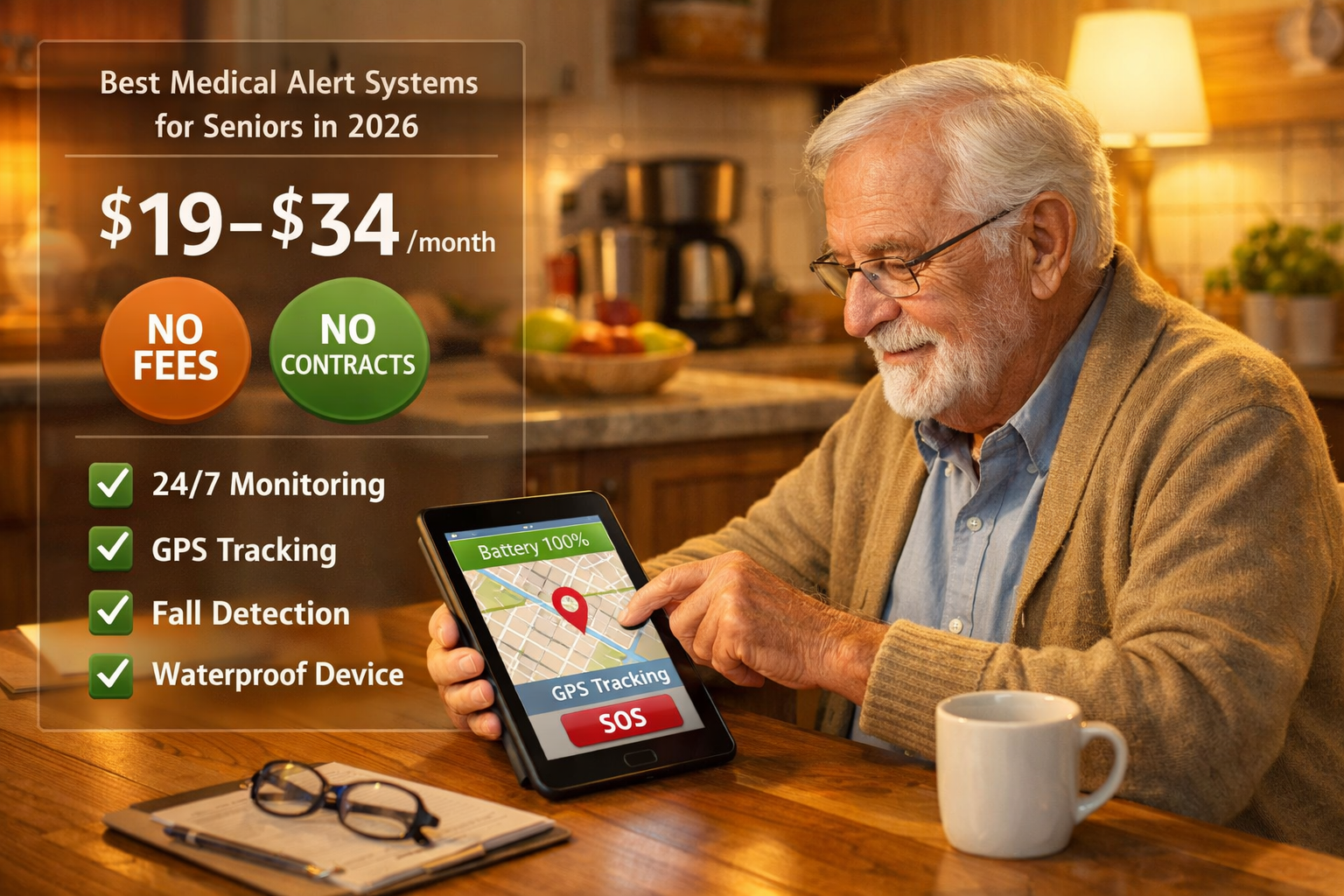
Fall detection medical alert systems typically start at $20–$34 per month, with fall detection adding roughly $10 more per month [2]. That’s a reasonable price for serious peace of mind — but only if there are no surprise fees stacked on top.
The Best Medical Alert Systems for Seniors in 2025: Top Picks by Category
Let’s break down the top options by what they do best. No system wins in every category, so matching the right device to the right situation is key.
🏆 Best Overall: Bay Alarm Medical
If you want one recommendation and don’t want to overthink it, Bay Alarm Medical is the answer. Their emergency response center answers in 30 seconds or less — one of the fastest in the industry [1].
What makes it stand out:
- No activation fees
- Dedicated SOS buttons on all devices
- Smartwatches with built-in speaker and microphone — no phone pairing needed
- Dual-system options for extra protection at home and on the go
- Caregiver app with GPS tracking and account management [1]
Bay Alarm Medical also earns top marks for customer service among fall detection systems [2]. For seniors who want a reliable, full-featured system without complicated setup, this is the one.
🫸 Best for Fall Detection: Medical Guardian
Falls are the leading cause of injury among older adults, so automatic fall detection isn’t just a nice feature — it’s often essential. Medical Guardian leads this category with reliable, accurate fall detection and an average response time of 52 seconds [2].
Standout features:
- Accurate GPS tracking
- Battery life up to 5 days on mobile devices
- Easy unboxing and setup — no tech skills needed
- Clear call quality during emergencies [2]
The 5-day battery life is a big deal. Nothing is more frustrating than a safety device that needs charging every night.
💰 Best No-Monthly-Fee Option: Silent Beacon
Not everyone wants an ongoing subscription. Silent Beacon is the most affordable no-fee option, calling 911 and up to 7 emergency contacts without any monthly charges [4].
Good for:
- Seniors on a tight fixed income
- Those who want a backup device, not a primary system
- People with strong family support networks nearby
The trade-off? No professional monitoring center. If you press the button and no one answers, you’re relying on 911 or family — which works fine for many people, but isn’t right for everyone.
🏠 Best At-Home Protection (No Monthly Fee): LogicMark
For seniors who spend most of their time at home and want something simple, LogicMark offers plug-and-play home protection with no monthly fees [4]. It’s stationary-focused, which means no GPS, but the simplicity is the point.
If your parent rarely leaves the house and just needs a reliable button to press in an emergency, LogicMark gets the job done without ongoing costs.
💵 Best Budget Monthly Option: Senior Safety
Senior Safety has been in the business for 25 years and keeps their pricing at just $19/month — with no long-term contracts and no cancellation penalties [3]. That’s rare in this industry.
For seniors who want professional monitoring at the lowest possible monthly cost without being locked into a contract, Senior Safety is worth a serious look.
🚫 Best for Transparent Pricing: MobileHelp
Hidden fees are one of the biggest complaints in this industry. MobileHelp earns its reputation as the top pick for “no surprise fees” — what you see is what you pay [2]. For cost-conscious seniors or family members managing a budget, that predictability matters.
🔋 Best Battery Life: LifeFone
If battery anxiety is a real concern — and for many seniors, it is — LifeFone offers the longest battery life among top-tier fall detection systems [2]. Less charging means less chance of the device being dead when you need it most.
How to Choose the Right System for Your Situation
Here’s a simple way to think about it:
Are you mostly at home? → Consider LogicMark (no fees) or Bay Alarm Medical’s home system
Do you go out regularly? → You need GPS. Look at Medical Guardian or Bay Alarm Medical’s mobile options
Has your doctor mentioned fall risk? → Prioritize fall detection. Medical Guardian or LifeFone are strong picks
Is budget the top concern? → Start with Senior Safety ($19/month, no contract) or Silent Beacon (no monthly fee)
Do you want family to stay in the loop? → Bay Alarm Medical’s caregiver app gives family real-time GPS and account access [1]
Do you hate complicated tech? → Medical Guardian’s easy setup and LogicMark’s plug-and-play design are your friends [2]
A Quick Comparison Table
| System | Best For | Monthly Cost | Fall Detection | GPS |
|---|---|---|---|---|
| Bay Alarm Medical | Overall best | Varies | Add-on | ✅ |
| Medical Guardian | Fall detection | ~$30–$45 | ✅ Included | ✅ |
| Silent Beacon | No monthly fee | $0 | ❌ | ✅ |
| LogicMark | At-home, no fee | $0 | ❌ | ❌ |
| Senior Safety | Budget monthly | $19/month | Add-on | ✅ |
| MobileHelp | Transparent pricing | Varies | Add-on | ✅ |
| LifeFone | Long battery life | ~$25–$40 | Add-on | ✅ |
Prices are approximate and subject to change. Always verify current pricing directly with the provider.
Questions to Ask Before You Buy
Don’t just click “add to cart.” Ask these questions first:
- Is there a free trial period? Many companies offer 30-day trials.
- What happens if the device breaks? Is replacement covered?
- How does billing work? Monthly, quarterly, or annual?
- Is the monitoring center U.S.-based? Response quality can vary.
- Can I cancel anytime? Avoid long-term contracts if possible.
Conclusion: The Right System Is the One That Gets Used
The honest truth about medical alert systems? The fanciest device in the world is useless if it sits on the nightstand. The best system is the one a senior will actually wear — every single day.
Start with your real situation. Are you mostly at home or always on the move? Is fall detection a priority? What’s your monthly budget? Answer those questions first, then match to a system.
Here’s what I’d suggest as your next steps:
- ✅ Make a short list of 2–3 systems that fit your needs based on this guide
- ✅ Call each company and ask about hidden fees before signing up
- ✅ Look for a free trial — most reputable companies offer one
- ✅ Involve the senior in the decision — they’re more likely to wear something they chose
- ✅ Set a reminder to review the system every 6 months as needs change
Living independently is something most seniors want deeply — and the right medical alert system makes that possible for longer. That’s not a small thing. It’s worth getting right.
References
[1] Best Medical Alert Systems – https://www.safehome.org/medical-alert-systems/best/ [2] Best Medical Alert Systems With Fall Detection – https://www.ncoa.org/product-resources/medical-alert-systems/best-medical-alert-systems-with-fall-detection/ [3] Senior Safety Medical Alert Systems – https://www.seniorsafety.com [4] Medical Alert Systems With No Monthly Fee – https://www.seniorliving.org/medical-alert-systems/no-monthly-fee/ [5] 2025 Best Elderly Medical Alert Systems – https://assistinghandsfortlauderdale.com/2025-best-elderly-medical-alert-systems/ [6] Medic Alert Systems Options – https://www.aarp.org/caregiving/home-care/medic-alert-systems-options/ [7] Medical Care Alert – https://www.medicalcarealert.com